
Car Fragrance Types: Spray, Liquid, Solid and Built-In Systems Compared

Four fragrance formats. Four different ways to live with scent in a car.
What type of car fragrance is best?
There is no single answer for everyone.
Spray gives you immediate control. Liquid fragrance provides continuous evaporation. Solid scent releases fragrance gradually from a carrier. And some newer vehicles integrate fragrance directly into the cabin system.
The differences come down to:
scent delivery, maintenance, leakage risk, cost and long-term flexibility.
For DAILY LAB, one format currently offers the best overall balance for the widest range of drivers:
replaceable solid scent.
01 — Spray: flexible and immediate
Spray is the simplest format.
You want fragrance, you spray it.
You decide when to use it and how much scent enters the cabin.
That makes spray particularly suitable for people who want fragrance occasionally rather than continuously.
The trade-off is equally simple: it requires manual use, and the fragrance experience is more immediate rather than continuously present in the background.
Best for
Drivers who want fragrance on demand.
Main trade-off
Less continuous diffusion and more manual use.
A small DAILY LAB note: we also make a dual-use fragrance spray with a formula developed for both personal fragrance and in-car use.
It is currently available only in parts of Asia and is not yet sold in Europe or North America. If you would like to see it in your market, you can always tell us through social media or email.
02 — Liquid fragrance: continuous, but more to manage
Liquid car fragrance can provide continuous and often noticeable scent through a bottle, wick, membrane or another exposed surface.
But in a car, the biggest practical concern is simple:
it is still free-flowing liquid.
A bottle can tilt. A seal can fail. A container can leak.
And inside a vehicle, fragrance leakage can become more than a stain.
Kia's official owner guidance specifically warns users to prevent perfume and air freshener from contacting interior parts because they may cause damage or discoloration. Kia's infotainment guidance also states that leakage from an air freshener installed around an air-conditioning vent may deform the surrounding surface.
NIO's official ET7 manual offers a similar material precaution: it notes that fragrance may undergo chemical reactions with organic substances and advises keeping the ceramic fragrance core away from plastic components.
Depending on the formula and surface involved, a spill may therefore affect plastics, coatings, leather or other interior finishes.
If the material itself has been chemically altered, simply wiping it clean may not restore the original surface.
Best for
Drivers who prefer continuous and more noticeable passive fragrance.
Main trade-offs
Liquid management, leakage risk and potentially faster evaporation in warm conditions.

03 — Solid scent: DAILY LAB's most balanced choice
Solid scent works differently.
Instead of storing a reservoir of free-flowing fragrance liquid inside the cabin, fragrance is held in or on a solid carrier and gradually released into the surrounding air.
This does not mean:
solid scent is automatically better in every situation.
Its advantage is balance.
There is no exposed reservoir of free-flowing liquid, while the fragrance can still diffuse continuously in the background.
A replaceable solid scent system can offer:
**continuous passive diffusion
low maintenance
compact hardware
simple refill replacement
less concern about liquid leakage
freedom to change fragrances later**
DAILY LAB currently uses several solid-scent formats across its automotive range.
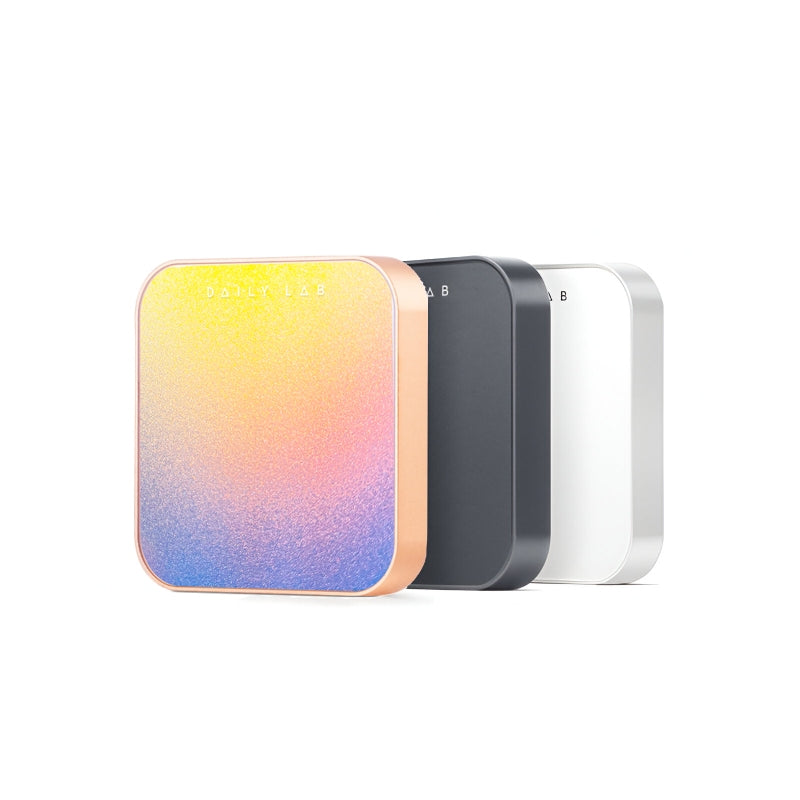
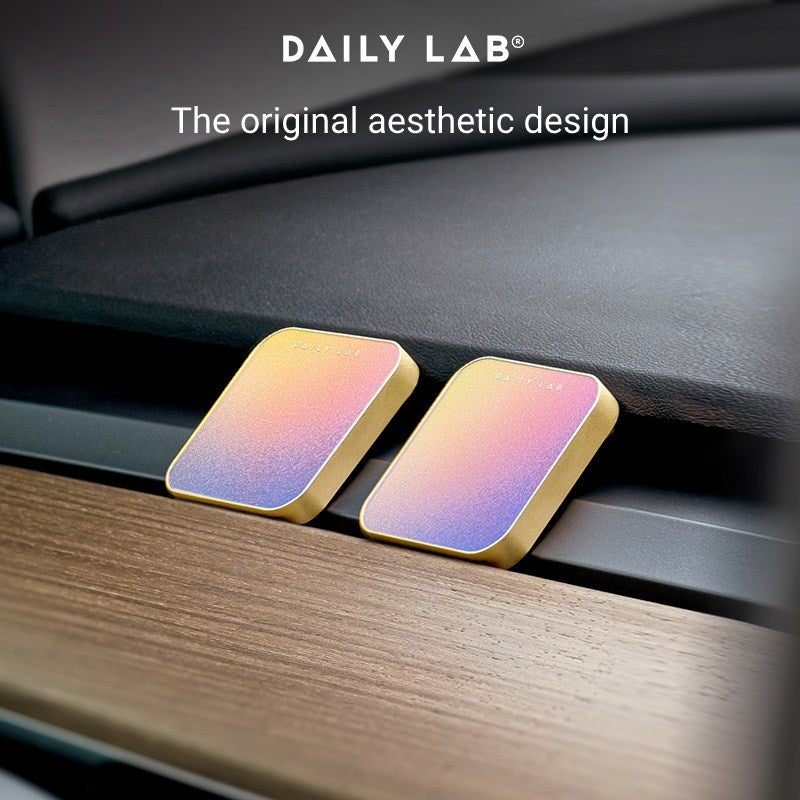
The Star Glow Car Diffuser uses solid scent refills with DAILY LAB slow-release technology. DAILY LAB's current product information also notes that actual refill life varies with temperature, humidity and air-vent use.
The Aroma Stick Car Diffuser uses a solid scent refill with DAILY LAB slow-release technology as well.
And the 8CM Fragrance Plaster uses another solid carrier format, offering a different way to place and diffuse fragrance inside the vehicle.
Different hardware.
Different positions.
The same underlying idea:
The hardware stays. The fragrance changes.
For DAILY LAB, this is why replaceable solid scent works particularly well for everyday automotive use.
It may not create the strongest immediate burst.
It may not be the most technologically integrated system.
But for most drivers, it creates a useful balance between:
fragrance experience, maintenance, hardware and future choice.
Best for
Drivers who want continuous fragrance, simple maintenance and long-term freedom to change scents.
Main trade-off
The fragrance experience is usually more restrained than an immediate spray or some high-output liquid systems.
04 — Built-in fragrance: maximum integration, less flexibility
Some premium vehicles now integrate fragrance directly into the climate-control and digital cabin system.
This is already a real production technology. For example, NIO's official ET5 manual describes an Intelligent Fragrance System that recognizes installed fragrance cartridges and lets the driver switch the system on or off, select fragrances and adjust concentration from the center display.
Mercedes-Benz also officially describes its AIR-BALANCE fragrance system as optional equipment on certain vehicles.
The advantage is clear:
the car itself becomes part of the diffuser.
HVAC airflow, software and fragrance can work together as one integrated experience.
The trade-off is greater commitment. Depending on the vehicle, an integrated fragrance system may be connected to factory equipment or an option package rather than added later as a simple standalone accessory.
Users may also be more dependent on compatible cartridges designed for that particular vehicle system. NIO's own manual, for example, recommends using its compatible fragrance cores to maintain proper system function and fragrance quality.
From DAILY LAB's perspective, the distinction is simple:
automakers specialize in integrating fragrance into the vehicle. Specialist fragrance brands can focus more deeply on fragrance itself.
Best for
Drivers who value seamless factory integration.
Main trade-offs
Higher commitment, stronger vehicle-system dependence and less freedom to change fragrance brands later.
Four systems, side by side
01 — Spray
Most flexible in the moment.
Use it when you want it. Easy to change, but less continuous.
02 — Liquid
Continuous and often more noticeable.
But free-flowing liquid introduces leakage and interior-contact risk.
03 — Solid scent
The most balanced choice, in DAILY LAB's view.
Continuous diffusion, simple replacement, no exposed free-flowing liquid reservoir and strong long-term flexibility.
04 — Built-in fragrance
The most integrated choice.
Excellent connection with the vehicle itself, but with greater system commitment and less aftermarket freedom.

Why DAILY LAB prefers replaceable solid scent
DAILY LAB does not believe car fragrance should simply be as strong as possible.
We care more about whether fragrance fits naturally into everyday automotive life.
It should be:
easy to install, easy to replace, easy to change, and easy to rethink later.
A car may stay with you for five or ten years.
Your fragrance preference probably will not.
That is why DAILY LAB believes:
Replaceable solid scent currently offers the best overall balance for the widest range of drivers.
It sits comfortably between several extremes:
more continuous than spray, less dependent on free-flowing liquid, less tied to the vehicle than a built-in system, and more open to personalization later.
You do not need to decide what your car should smell like for the next five years when you configure the vehicle.
You can decide again next season.
Good hardware can stay. Fragrance should be free to change.
Cars last.
Taste moves.
Seasons change.
New fragrances appear.
New brands appear.
So we prefer a system that leaves room for change.
Choose the hardware that fits your car.
Then keep changing the fragrance whenever you want.
Good hardware can stay. Fragrance should remain free to evolve.
Quick Questions
Can liquid car fragrance damage a car interior? It can. Kia's official guidance warns that perfume and air freshener may cause damage or discoloration to interior parts, while NIO's official manual warns that fragrance materials may chemically react with organic substances and should be kept away from plastic components.
Is solid car fragrance always better than liquid? No. Different formats suit different users. DAILY LAB prefers replaceable solid scent because we believe it offers the best overall balance between continuous diffusion, maintenance, reduced liquid-leakage concerns and long-term flexibility.
What is the main advantage of a built-in car fragrance system? Integration. OEM systems can combine fragrance with HVAC and vehicle software. NIO's official ET5 manual, for example, shows fragrance selection and concentration control directly through the vehicle interface.
Does DAILY LAB make a fragrance spray? Yes. DAILY LAB currently offers a dual-use fragrance spray in parts of Asia for both personal fragrance and in-car use. It is not currently available in Europe or North America.
Share this
Popular posts

Popular posts

Popular posts
